
The Center for Cultural Landscapes Announces 2026 J.B. Jackson Book Prize Winner
The UVA School of Architecture’s Center for Cultural Landscapes is pleased to announce the recipient and finalist of the 2026 John Brinckerhoff Jackson Book Prize, an annual award recognizing outstanding scholarship that breaks new ground on a subject in landscape studies. This year's jury reviewed more than 60 submissions, reflecting the breadth and vitality of landscape-related research.
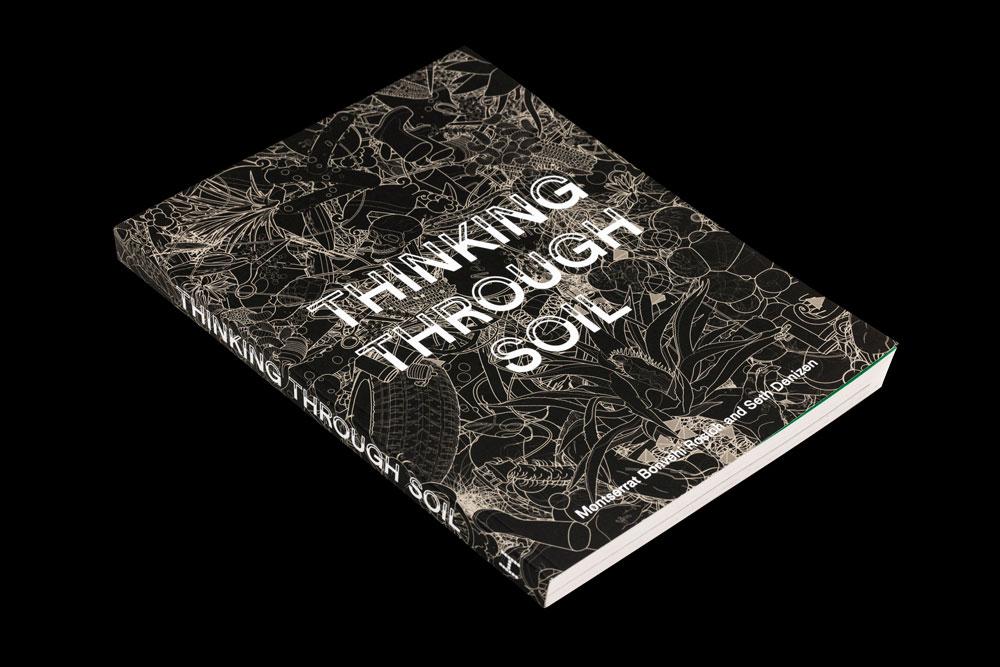
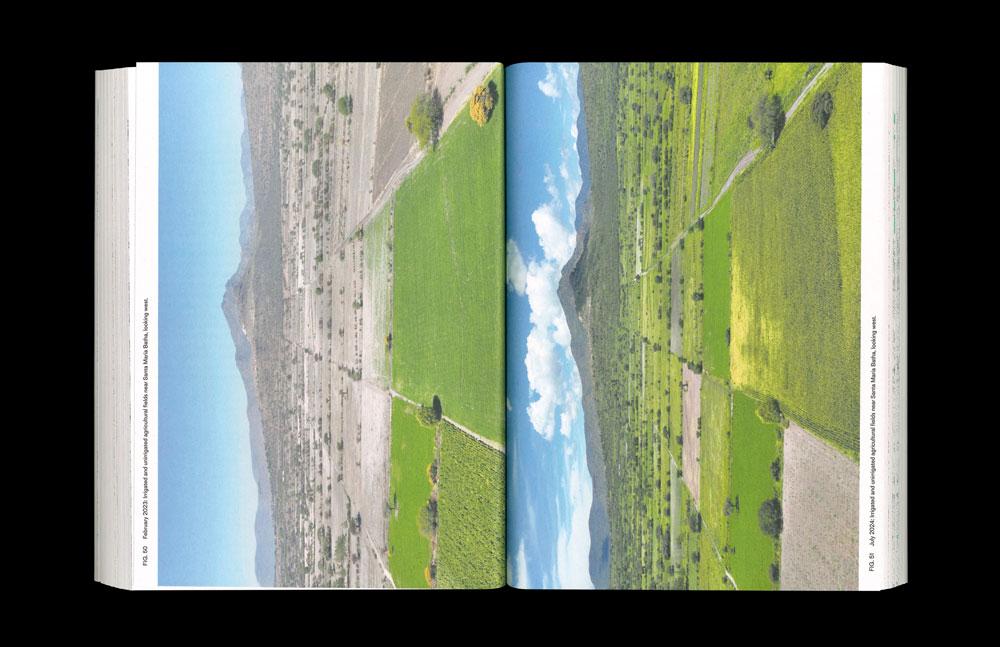
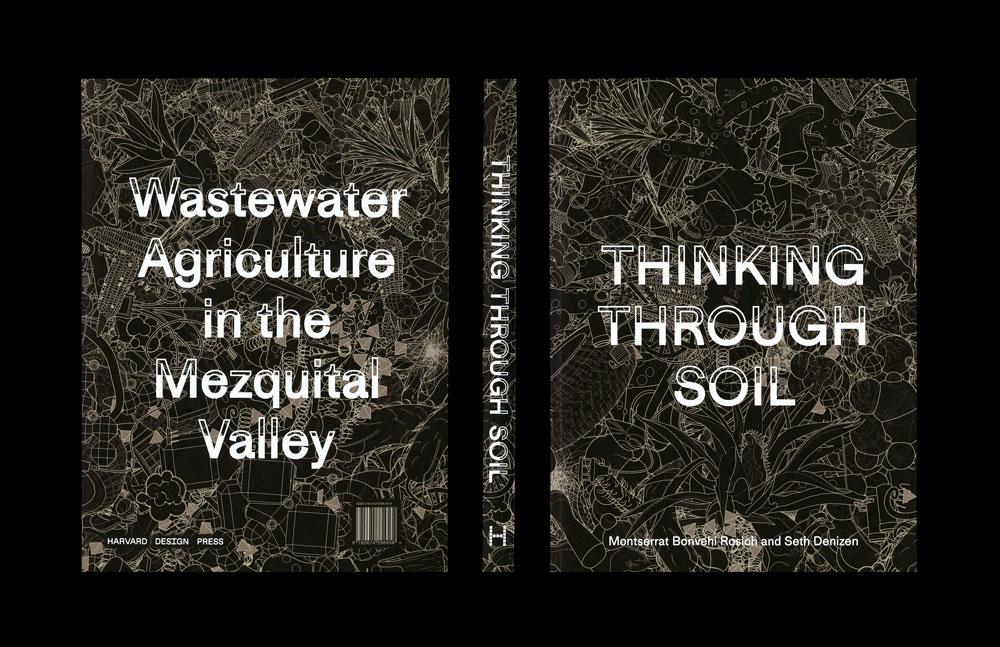
The 2026 J.B. Jackson Book Prize has been awarded to Thinking Through Soil: Wastewater Agriculture in the Mezquital Valley (2025) by Montserrat Bonvehi Rosich and Seth Denizen, published by Harvard Design Press, a book imprint at the Harvard University Graduate School of Design. The book examines the world's largest wastewater agricultural system and proposes a new way of understanding complex environmental challenges by placing soil at the center of landscape inquiry.
|
Image
|
Image
|
|
Image
|
Image
|
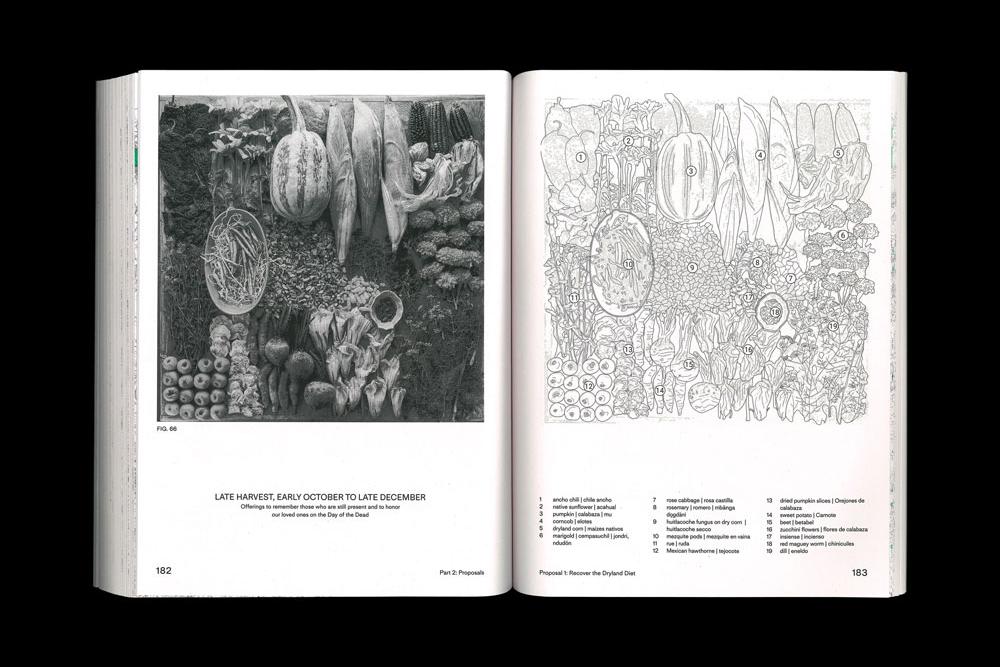
Jury chair Elizabeth K. Meyer praised the book for its "multi-scalar landscape methods" and its ability to reveal "the agency of landscape, and particularly soil, through a powerful synthesis of words, images, and diagrams." The jury also commended the authors, their students, and community collaborators for bringing clarity to the complex urban and rural entanglements that underpin wastewater agricultural systems in Mexico.
A central claim of this book is that over the next few decades, wastewater reuse will become a necessary and unavoidable part of addressing water scarcity in a warming world.
—Montserrat Bonvehi Rosich and Seth Denizen, Thinking Through Soil
The book traces the environmental histories embedded within Mexico City's vast water infrastructure, showing how landscapes remain interconnected across time and distance. As the authors write, "The southern lake system that supported Mexico City's agricultural production for thousands of years disappeared, only to reemerge as lakes, springs, and aquifers 100 kilometers away in the Mezquital Valley, the world's largest wastewater agriculture system."
The jury also named Burning Swamps: Peat and the Forgotten Margins of Russia's Fossil Fuel Economy (Cambridge University Press, 2025) by Katja Bruisch, as the 2026 finalist. The book explores the overlooked role of peat in Russian industrialization and electrification, offering a fresh perspective on energy history and the environmental legacies of fossil-fuel economies. In recognizing the book, the jury was impressed by its "compelling, well written narrative of a marginalized fuel" and its integration of landscape history and labor practices in ways that challenge conventional accounts of planetary change.
The John Brinckerhoff Jackson Book Prize is awarded to the author of a book published within the past three years on a subject pertaining to landscape studies. There are no restrictions with regard to period, topic, or author’s nationality. Only books based on original research and those that break new ground in method or interpretation are considered. The purpose of this prize, awarded annually since 2011, is to reward contributors to the intellectual vitality of garden history and landscape studies. Bonvehi Rosich and Denizen will receive a cash prize and participate in a public discussion about their book with Professor Elizabeth K. Meyer at the School of Architecture in the Spring 2027 semester.
The UVA Center for Cultural Landscapes (CCL) continues to be grateful to the generosity of Elizabeth Barlow Rogers for transferring her Foundation for Landscapes Studies’ annual J.B. Jackson Book Prize and David Coffin Publication Grant to CCL.
2026 J.B. Jackson Book Prize Jury
Elizabeth K. Meyer, Merril D. Peterson Professor, Landscape Architecture, UVA
Bradley Cantrell, Commonwealth Professor, Landscape Architecture, UVA
Sarah Lopez, Associate Professor, Weitzman School of Design, University of Pennsylvania
Laura Martin, Associate Professor, Environmental Studies, Williams College
2026 J.B. Jackson Book Prize Winner
Image
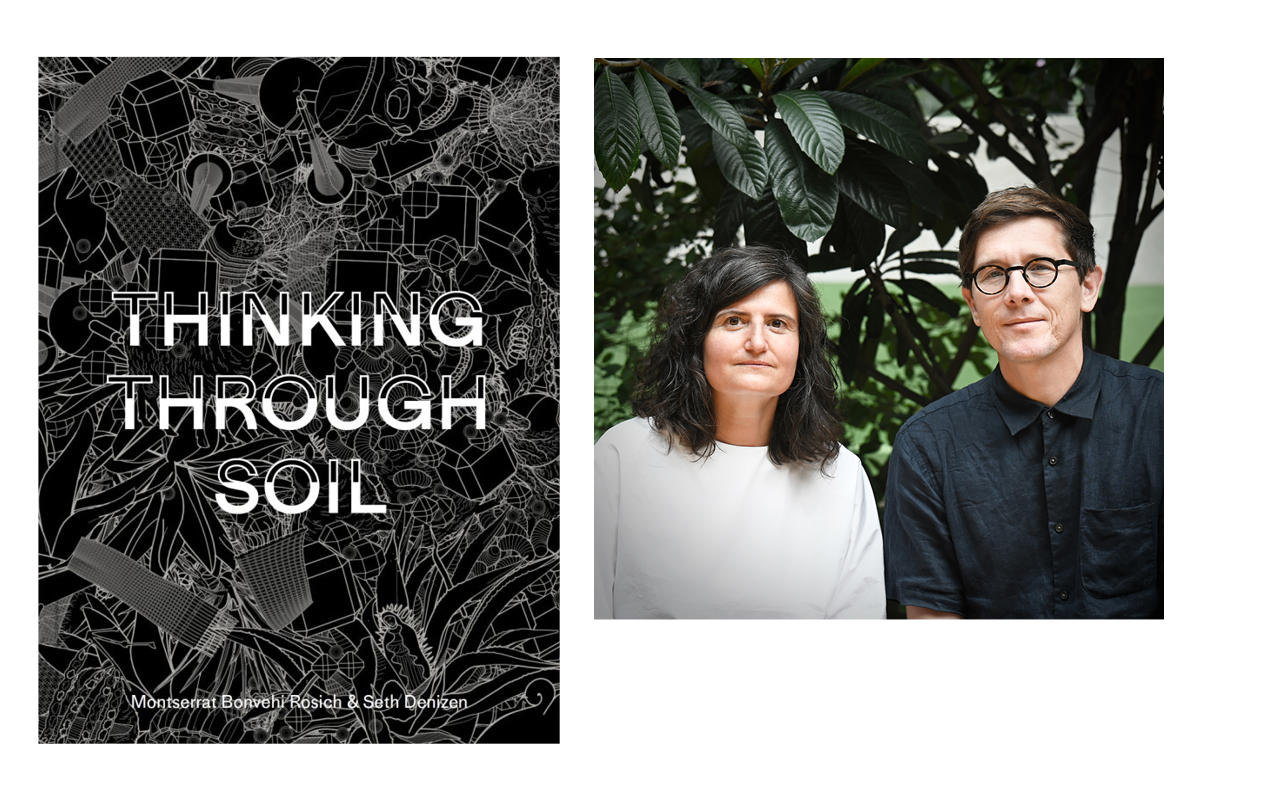
Thinking Through Soil: Wastewater Agriculture in the Mezquital Valley
Montserrat Bonvehi Rosich & Seth Denizen
Assistant Professors, Sam Fox School of Design & Visual Arts, Washington University
Harvard Design Press, 2025
In cities, soil comprises a blurry category whose boundaries are both empirically uncertain and politically contested. By considering the specific material and political conditions of the world’s largest wastewater agricultural system, Thinking Through Soil: Wastewater Agriculture in the Mezquital Valley offers a design methodology derived through a sustained engagement with Mexico’s most controversial soil, and imagines what a better environmental future might look like in central Mexico. This case study demonstrates a way to “think through soil” in urban areas—to privilege soil as the basis for decision-making in city planning and design— and asserts an approach to soil knowledge with global utility, particularly for places where environmental problems are complex, long-term, and have no purely technical solution.
Montserrat Bonvehi Rosich is a licensed Spanish architect and urban designer with an interest in living systems, climate, and soils in urban environments. In 2019 she was the recipient of the SOM Foundation Research Prize and has previously taught at the UVA School of Architecture, ETSAB-UPC Barcelona, and Harvard GSD, where she was the 2017–2018 Daniel Urban Kiley Fellow in landscape architecture. She is currently a Visiting Assistant Professor at the Sam Fox School of Design & Visual Arts at Washington University in St. Louis.
Seth Denizen is a researcher and design practitioner trained in landscape architecture, evolutionary biology, and human geography. In 2019 he was the recipient of the SOM Foundation Research Prize and has previously taught at Harvard GSD, the University of California Berkeley, the University of Hong Kong, and Princeton University, where he was a Princeton-Mellon Fellow. He is currently Assistant Professor at the Sam Fox School of Design & Visual Arts.
2026 J.B. Jackson Book Prize Finalist
Image
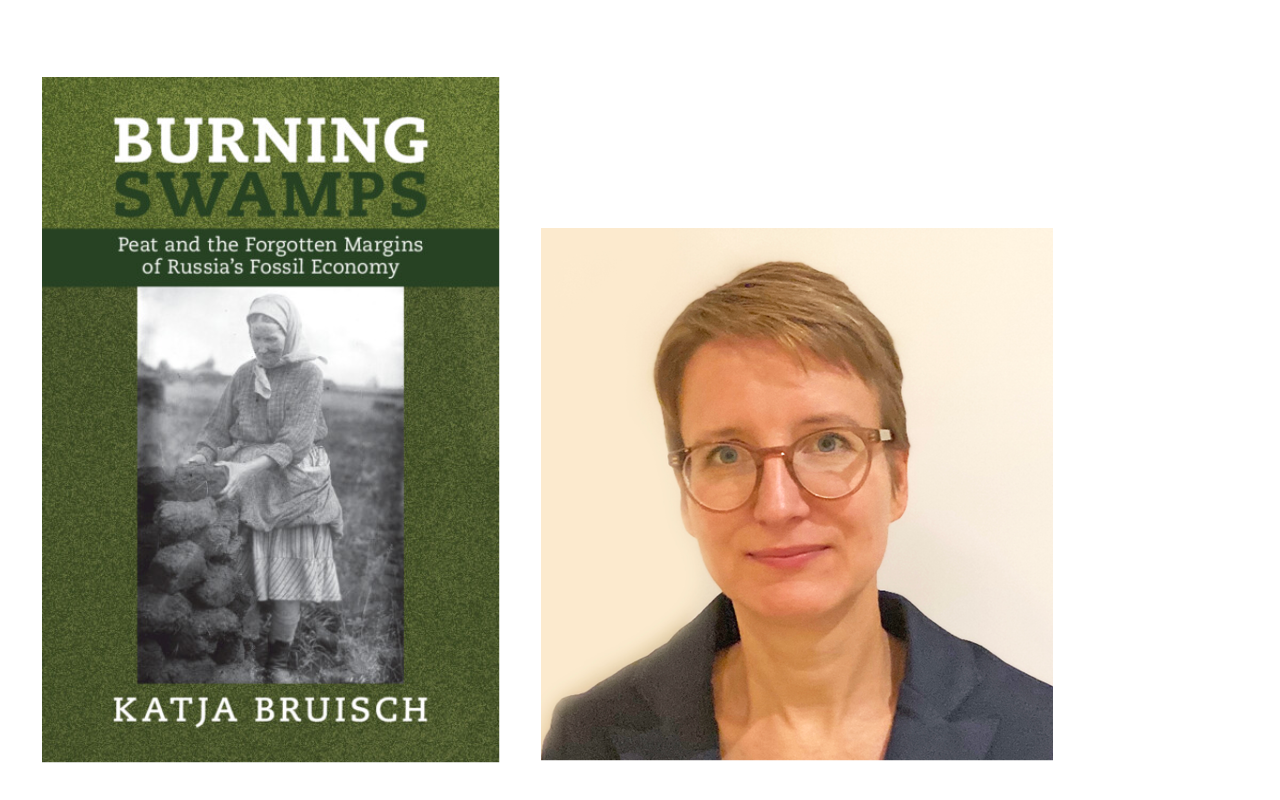
Burning Swamps: Peat and the Forgotten Margins of Russia's Fossil Economy
Katja Bruisch
Assistant Professor, Trinity College Dublin
Cambridge University Press, 2025
What happens if we tell the history of the planetary emergency from the margins? In Burning Swamps: Peat and the Forgotten Margins of Russia’s Fossil Economy, Katja Bruisch traces the forgotten role of peat in Russian industrialisation and electrification and points to the social and ecological legacies of this history. Providing a corrective to more familiar energy history narratives dominated by coal, oil, and gas and with an eye to the intersecting histories of labor and matter, this book moves beyond the socialism/capitalism binary and invites us to recognize the role of seemingly marginal people, resources and places in the broader trajectory of planetary change.
Katja Bruisch is the Ussher Assistant Professor in Environmental History at Trinity College Dublin. Her research explores the history of energy, extractivism, and land in the Russian Empire and the Soviet Union. Before joining Trinity's History Department in 2016, she was a research fellow at the German Historical Institute in Moscow.
***
2027 Landscape Studies Initative Book Awards
Details about the 2027 UVA CCL’s Landscape Studies Initiative Book Awards will be available in October on the CCL website.
Submissions for books published between 2024 and 2026 are eligible for the J. B. Jackson Book Prize. Nominations are due May 1, 2027.
Authors who need pre-publication funding, such as travel and photography, are encouraged to apply for the David Coffin Publication Grant.
Submissions are due January 1, 2027.
Professor Meyer welcomes inquiries about the awards program at Lsibookprize@virginia.edu.