
Saadia Rais
TRANSCENDENT ASSEMBLAGE : The Unification of Spirit and Material at James Rose’s Ridgewood Residence
This dissertation examines the residence of landscape architect James Rose, focusing on design changes implemented after the 1960s. In its first iteration in 1953, Rose’s residential design embodied modernist ideologies from his early writings. The design integrated indoor and outdoor spaces to create efficient yet meaningful domiciles in the context of post-war suburban banality. Starting in 1960 until his death in 1991, Rose began frequently visiting Japan and converted to Zen Buddhism, during which time his writing and design style significantly changed. His work embraced Zen concepts, especially the rejection of scripture to emphasize present interactions with the everyday world, as well as the presence of spirit in all things. This is observed in the way he described and interacted with materials, highlighting the immanent beinghood of these materials and the role of the designer to facilitate the materials’ desires through careful arrangement. This approach connects material design practice to spiritual practice, departing from the secular materialism that dominated modernism. Rose’s Ridgewood residence is a built example of how material arrangements can illuminate spiritual presence within the mundane world. In the final years of his life, Rose described this phenomenon as “the Heavenly Environment”.
The residence is used to theorize the Transcendent Assemblage, employing a new materialist lens to revitalize conversations on the spirit of the landscape in design theory. Despite its longstanding history, discourse on the spirituality of landscapes was discarded throughout the 20th century. Postmodern discussions on genius loci, or spirit of place, replaced concepts of spirit with site analysis or cultural value. There is an opportunity to return to examining the spirit of the landscape through a new materialism. However, new materialist concepts do not consider how form and spatial arrangement factor into beinghood. Landscapes take on their own presence, separate from their parts, when their assemblages are considered as whole spatial arrangements. Landscapes have longstanding histories as entities bridging the earthly and heavenly realms. The landscape assemblage is unique because of its ability to connect us to the infinite in both scale and number, illuminating the transcendent within the mundane world. Despite its monotonous and commodified suburban surroundings, Rose's residence reflects spirit by meticulously showcasing ephemeral interactions of light, water, foliage, and air.
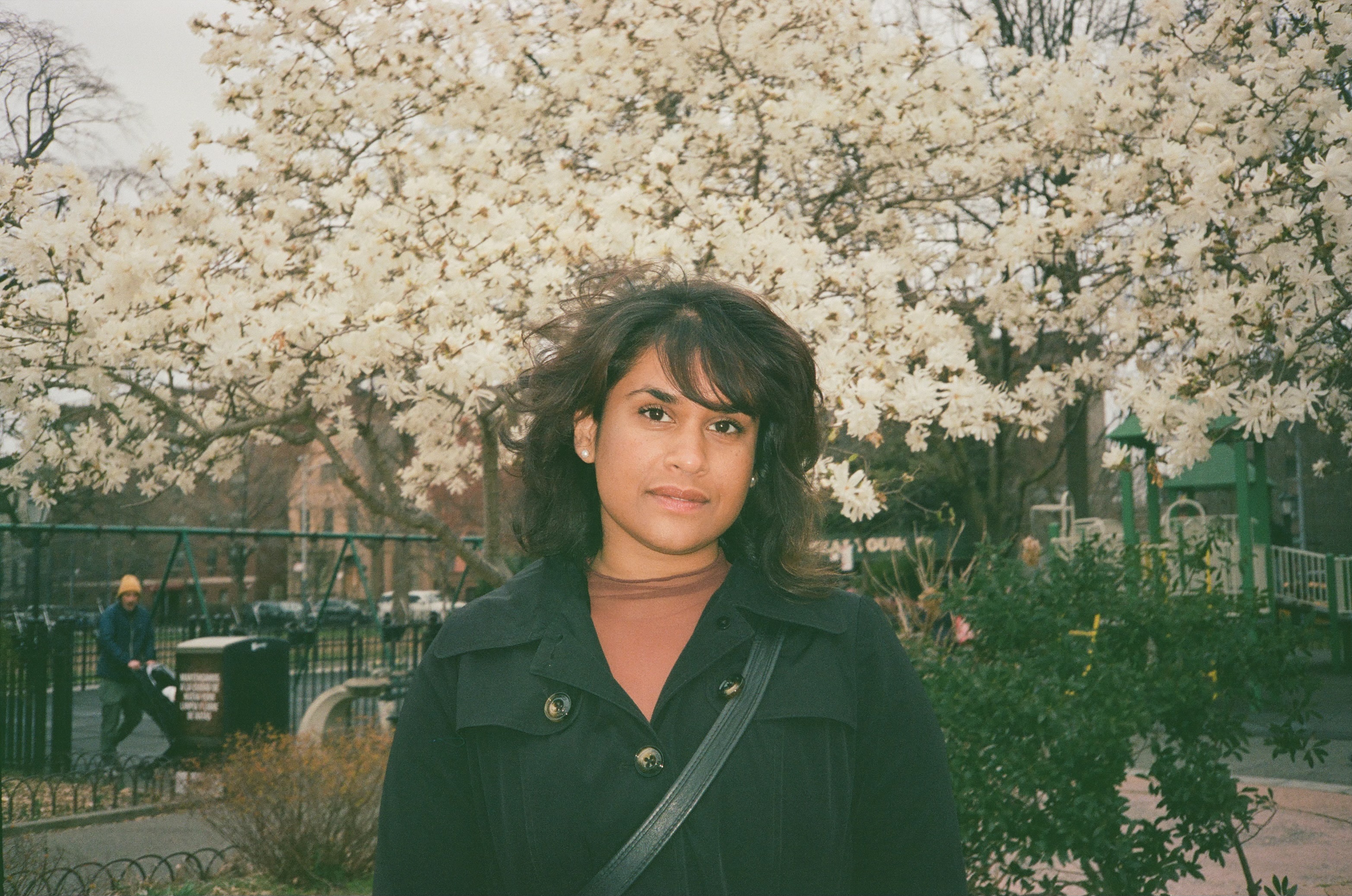
Saadia Rais is a landscape designer, sociologist, and artist. She earned her Master of Landscape Architecture degree from University of Georgia College of Environment + Design (2020). She holds a M.S. in Sociology (2016) with a concentration in Gender & Sexuality studies, and a B.A. in Philosophy (2013) from Virginia Tech. Saadia practiced as a landscape designer for six years in Houston, Richmond, Charlottesville, and the Washington D.C. metropolitan area. She joined the UVA A-School as a Ph.D. student in 2024. In her free time, Saadia enjoys hiking, foraging, kayaking, filmmaking, sketching, and exploring cities on foot or on bike. She performs in a solo multimedia performance art ambient project, as well as in the Richmond no-wave band Clenchers. Finally, she collaborates with musicians and dancers to choreograph site-specific land-based performances.
- SCRAPS: James Rose’s Practice in Honoring the Material World (Article in Lunch Journal, 2026)
- Modernism Reconsidered: James Rose and the Ridgewood Residence (University of Georgia ProQuest Dissertations & Theses, 2020)
- UVA Provost Fellowship
- UVA Society of Fellows - Junior Fellow
- UVA CE+ - President