
A-School faculty and students participate in conference that celebrates urban design as a vital disciplinary and civic practice
Image
In early October, the Association of Collegiate Schools of Architecture (ACSA) in partnership with the Urban Design Academic Council (UDAC) and the American Institute of Architects, Regional and Urban Design Committee (AIA, RUDC) partnered to host the 2026 Intersections Research Conference, focused on highlighting the intersection of education, research and practice. The conference, which took place in New York City, created opportunities for new partnerships, collaborations and critical observations — bringing together academics and practitioners around the theme of Urban Design Matters.
UVA School of Architecture Associate Professor Mona El Khafif, who served on the conference’s steering committee and participated in several of the event’s special sessions, shared, “To echo Harrison Fraker, Professor Emeritus of Architecture and Urban Design and former Dean at UC Berkeley, Urban Design Matters marked the first time an ACSA research conference brought together organizations representing both academia and professional practice around the shared concerns of urban design. The conference brought together multiple generations—from professor emeriti to undergraduate students—along with practicing urban designers and architects, city administrators, educators, and academics. People who rarely find themselves in the same room debated the same questions and learned from one another.”
The conference foregrounded urban design as an integrative, vital disciplinary and civic practice, instrumental in shaping affordable, just, sustainable, and adaptable built environments worldwide. The steering committee received a particularly large number of exceptional submissions representing theoretical, methodological, and practice-based perspectives that interrogate the agency of urban design across scales, cultural traditions, institutions, and communities.
Image
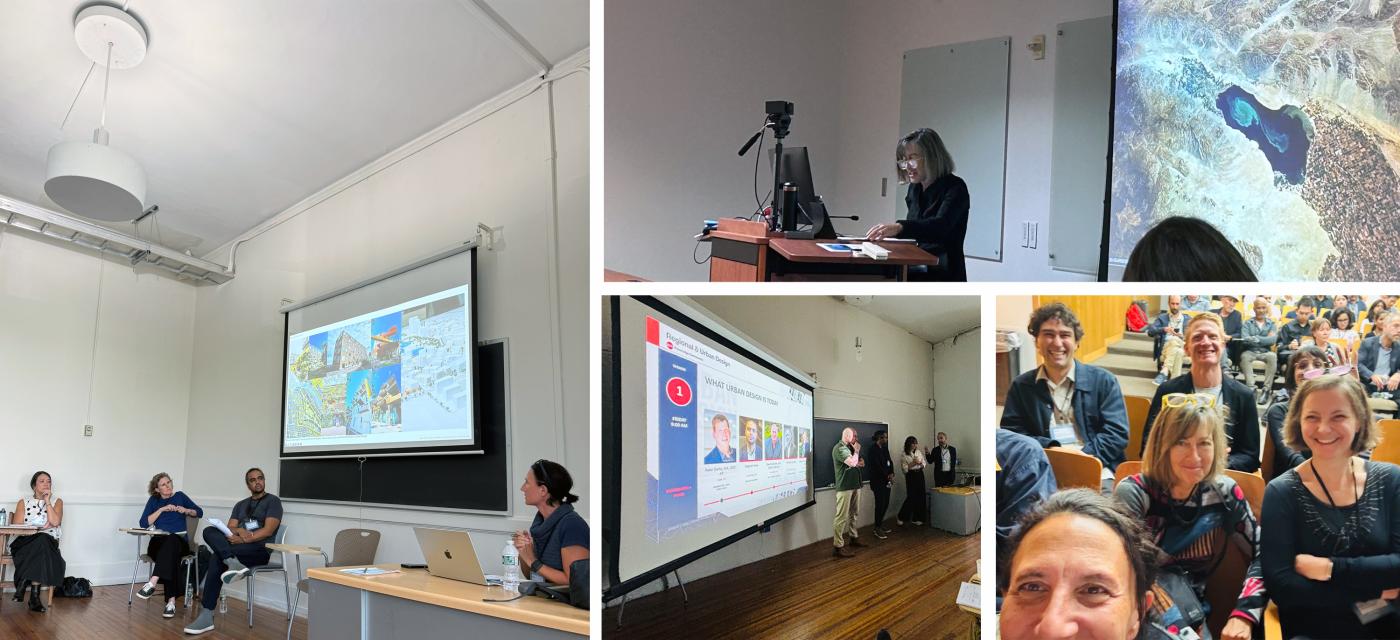
Seven faculty members and six student projects from the UVA School of Architecture were represented at the conference, contributing to the rich dialogue and innovative propositions around the event’s core provocation: why urban design matters today—environmentally, politically, socially, and spatially—and how it meaningfully and critically addresses contemporary urban issues.
“Urban design is an evolving interdisciplinary field of research and practice. As an early-career urban design researcher, I find it important to meet like-minded colleagues who are developing novel methods and practices, testing them nationally and internationally, and considering how their work affects other disciplines,” said Tithi Sanyal, PhD candidate and lecturer, who presented her research on the role of urban design within Detroit's agroecological landscape, a post-industrial shrinking city. “It was a privilege to present my work and take part in conversations that ranged from nuances of everyday urbanism to bold regional-scale speculations that are pushing the boundaries of our discipline."
The conference opened with a keynote conversation between Paola Viganò (architect, urbanist and Professor in Urban Theory and Urban Design at the École Polytechnique Fédérale de Lausanne) and Georgeen Theodore (architect, urban designer, principal of Interboro Partners and professor at New Jersey Institute of Technology’s College of Architecture and Design), who kicked off the multi-day conference that included lively, sometimes heated, discussions—a demonstration of the strength of a community that crosses generations, institutions, disciplines, and the boundaries between academia, practice, and public service.
For recent graduates of the School of Architecture who attended the conference, the experience sparked excitement about the possibilities that urban design research offers, and its value to the shaping of complex urban conditions. “One of my favorite takeaways from the conference was about the importance of urban design: one panelist noted that it is necessary to understand that what we draw as urban designers will truly never be constructed as we have indicated, however, our participation in the design process is crucial in pushing the design in a positive direction to better support our environment and communities,” said Alan Watts (BSArch ’26), who currently is a technical designer at Gensler in Washington, DC.
Master of Urban Design graduate Sanika Mate (MUD ’25), who is an urban designer for MKSK based in Atlanta, shared, “Attending the ACSA conference was an energizing experience. The talks reinforced how powerfully urban design shapes the way people live, connect, and thrive in their communities, and I left excited about the role our work can play.” Both Watt and Mate were also honored to have their projects selected to be displayed at the conference alongside other exceptional student work, representing national and international design pedagogy.
Image
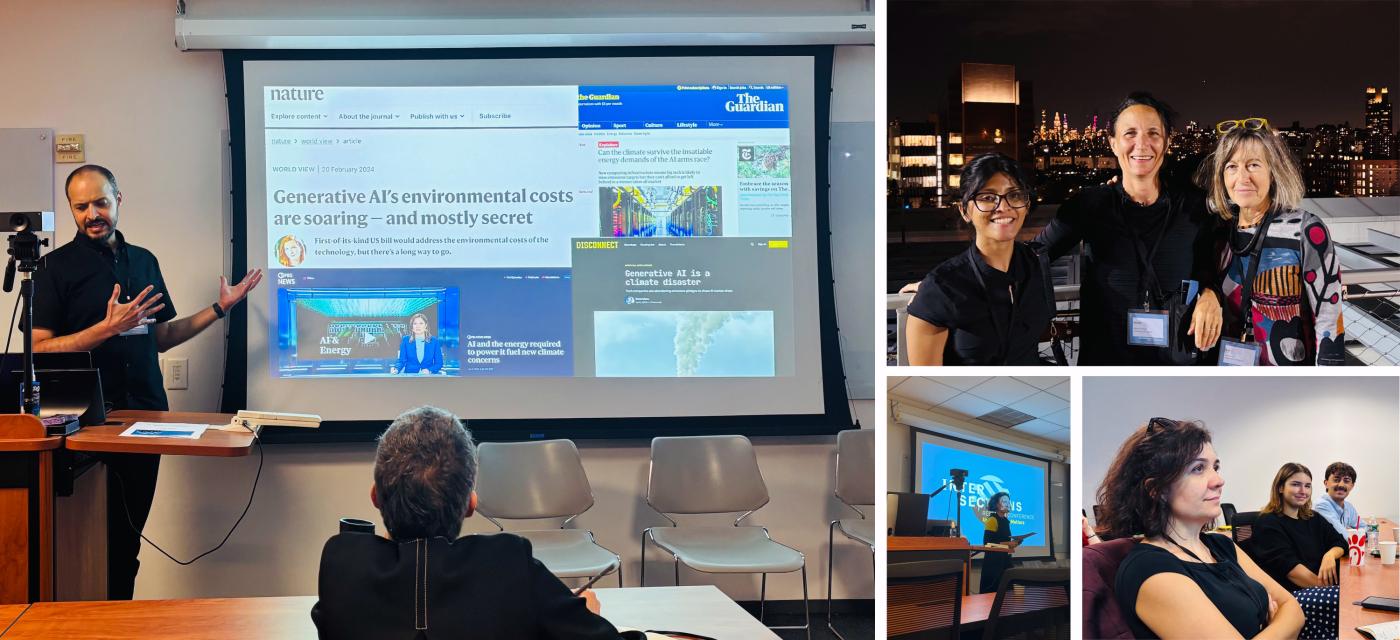
Among the nearly 250 participants, and in addition to El Khafif and Sanyal, Ila Berman (Professor, Architecture), Nicholas Brinen (Lecturer, Architecture), John Comazzi (Associate Professor, Architecture), Ali Fard (Associate Professor, Architecture), and Esther Lorenz (Associate Professor, Architecture), presented at the conference on a range of topics from urban design’s role in shaping playspaces for children in Hong Kong to speculations on a future terrapolis for California’s Salton Sea.
Conference panels and discussions were paired with walking tours, taking advantage of the hands-on learning opportunities afforded by engaging with New York City’s urban context. Participants joined tours of Hudson Yards and West Harlem, and attended a reception and keynote at the American Institute of Architects New York Chapter’s Center for Architecture.
For those involved, the conference did not propose finite conclusions but rather offered new opportunities to celebrate how urban design—through education and practice—truly matters. El Khafif described, “We debated the status of urban design education, whether urban design should be understood as a field or a discipline, and whether its persistent “in-between” status is an advantage or a disadvantage. Perhaps this ambiguity may be urban design’s strength. Urban design operates between architecture, landscape architecture, planning, infrastructure, ecology, real estate, policy, and civic life. Its agency comes precisely from its ability to connect these domains while maintaining a distinct spatial and design intelligence.”
UVA Faculty: Presentations and Panels
Ila Berman, University of Virginia
Session: Urban Repair, Resilience, and Speculative Futures
A Future Terrapolis: Speculative Urban Landscapes for the Salton Sea
This paper presents the research, design and pedagogy of an advanced urban design studio organized around the Salton Sea, California's largest and most contested inland water body, as a living laboratory for rethinking the boundaries between architecture, urbanism, landscape, infrastructure and ecology. Located 236 feet below sea level along the San Andreas Fault just north of Mexico, the Salton Sea is a site of compounding contradictions: a geothermal field bordering acidic mud volcanoes and hot springs, a fertile deltaic site fed by the Colorado river sustaining indigenous communities along the border, a former resort destination now a DIY cultural rust belt, a wildlife territory along a key migration route turned environmental disaster zone, and an emergent site for lithium extraction central to the global energy transition. This research and design studio attempts to rethink the relationship between conditions and territories often thought to be in opposition, to re-engage the technological and ecological edges of our disciplines, and the cultural and environmental margins of architecture, urbanism, and landscape, synthesizing these into new design models through a range of pedagogical methods.
Nicholas Brinen, University of Virginia
Session: Transforming Urban Infrastructure and Landscapes
Antecedent Apparatus: Transforming the Remnants of Urban Renewal
This research begins with a familiar pedagogical exercise in architectural education, “disassembly, analysis, and reassembly,” applied here to interrogate failed urban conditions. The subject of disassembly in this case is the derelict parking lot, which is ironically a blighted consequence, of the mid-twentieth-century urban renewal movement. Through designed demolition, reconfiguring, and prototyping, these voids that were once in service of private automobiles are transformed into sites of possibility such as public parks and community spaces, reversing decades of neglect. With the support of state grants, community partnerships, and a design-build pedagogical framework, two studio projects focused on transforming parking lots emerged as tangible counterpoints to the legacy of car-centric urbanism.
John Comazzi, University of Virginia
Session: Urban Futures and Cultural Spaces
Centering the Periphery: Balthazar Korab’s i tetti di Roma, 1966–68
In the Fall of 1966, Balthazar Korab, a Hungarian-born photographer living in the suburbs of Detroit, embarked on a year-long sabbatical to Italy in search of solace from the intensity of his flourishing career as a commercial photographer of architecture. In collaboration with architect, educator, and fellow expatriate Astra Zarina, Korab spent two years documenting the informal, often overlooked rooftop dwellings that dot the Roman skyline. These spaces—inhabited by artists, writers, and members of a burgeoning bohemian counterculture—offered a unique lens through which to view and analyze the Eternal City. Gaining access to these elevated enclaves, Korab captured approximately 3,200 images, over 200 of which were later published in the Italian volume I Tetti di Roma (The Rooftops of Rome, 1970). Through Korab’s photography, we gain an unprecedented visual access to a parallel city above the streets of Rome that presents a unique combination of cityscape, landscape, monument, and garden.
Mona El Khafif, University of Virginia / Conference Steering Committee
Special Session Participant, Presenter and Moderator
The Elephant in the Room: Considering Pressures on Urban Design and Academia
At a moment of global politico-eco-social crises when urban design education is needed more urgently than ever, many programs are facing intensifying threats. These threats are financial, but also arguably ideological and thus existential. This panel convenes educators in urban design to sample (then co-strategize responses to) the range of pressures facing urban programs in the US under current federal directives. These pressures bring new challenges to how we define and defend priorities for city-making, for academic freedom and democracy itself. The format for this session is less presentation-style, and envisioned more of a moderated conversation open to all viewpoints among panelists and audience members.
Urban Design’s In-Betweennes: Cost or Advantage?
Ask an urban designer what urban design is, and the answer is often expansive: a practice, a way of thinking, a bridge between architecture, landscape, and planning; between form and policy, building and city. But what does this disciplinary openness enable—and what might it prevent? Does a field without a clear disciplinary constitution risk lacking legibility, legitimacy, and the capacity to set its own intellectual agenda? Or is its refusal to settle precisely what allows urban design to engage conditions that no single discipline can address? These questions are particularly urgent at a time when accelerating urbanization, climate change, growing inequality, and rapid spatial transformation demand more just, resilient, and qualitative forms of urban development. Rather than seeking a single definition of urban design, this panel provide a starting point for discussion: What does the field gain by remaining in-between? What does it lose? And what forms of disciplinary identity, curricular footprint, institutional structure, and professional practice might urban design need to shape its own future?
Emerging Tools for Urban Design Pedagogies: Games, AI, and Digital Platforms for Stakeholder Engagement
Urban design is increasingly expected to engage a broad range of stakeholders in addressing complex urban challenges, from climate adaptation and mobility to housing, equity, and public health. At the same time, rapid advances in artificial intelligence, interactive media, games, mobile applications, and digital platforms are transforming not only how cities are designed, but also how designers teach, learn, communicate, and collaborate with communities. These emerging tools are creating new opportunities to move beyond traditional studio models toward more participatory, experiential, and data-informed forms of urban design education. This panel explores how emerging tools are reshaping urban design pedagogy while expanding meaningful stakeholder engagement throughout the design process. From game-based learning and simulation environments that help students understand complex urban dynamics, to mobile applications and immersive media that enable broader public participation, to AI-powered urban analytics and digital twin platforms that support collaborative, evidence-based decision making, the discussion examines how these technologies foster new relationships between designers, communities, policymakers, and other urban actors.
Ali Fard, University of Virginia
Special Session Presenter
Territory: Urban Design Agency in a Time of Planetary Crises
Contemporary urban design operates within the pressures of pervasive planetary urbanization, acute socio-ecological instability, and deepening power asymmetries. While global networks generate stark imbalances across the territory, operating under one large totalizing scale risks flattening regional idiosyncrasies, local cultures, and everyday human agency. To address these tensions, this panel engages a critical question of agency: how can urban design mobilize specific methods to address these complex territorial and geopolitical entanglements? This session foregrounds the value of critical, speculative design, and the interface between research experimentation and pedagogical practices. Research-based speculative practices allow designers to unlock new spatial imaginaries and construct radically alternative futures, and by extension, inform the pedagogies that will empower next generations of urban designers.
Esther Lorenz, University of Virginia
Session: Alternative Urban Narratives, Place and Everyday Life
Growing up in the High-Density City: The Kai Tak Development in Hong Kong through Children’s Perspective
At first glance, Hong Kong may not seem to be the most child-friendly place. A closer look reveals that children in Hong Kong actually grow up in a unique urban and cultural environment that shapes their daily lives and experiences. Their everyday routines are highly distributed and structured. The efficient, easily navigable transport system and general safety enable older children to enjoy greater autonomy of movement than they would in more car-centric systems. Recent projects in Hong Kong demonstrate an approach that is firmly rooted in the city's distinctive spatial characteristics and the daily urban lives of its inhabitants, including children. Rather than building more isolated parks or playgrounds, they create integrated urban spaces and amenities for children within connected everyday public spaces. This paper examines the ongoing Kai Tak Development from the perspective of children. Led by the Hong Kong Planning Department, the project is being realized on the 320-hectare site of the former airport. Designed as a city within a city' it incorporates residential, commercial and leisure facilities. Despite enormous economic pressure on land and real estate, and the aim of establishing the area as a key part of Kowloon East — Hong Kong's designated second core business district — the project emphasizes community building and wellbeing. Against this background, the paper examines the project's capabilities as child-oriented urban and social infrastructure.
Tithi Sanyal, University of Virginia
Session: Community, Equity, and Civic Urbanism
Detroit’s Agro-Urbanity: The Emergence Of A Distributed Agroecological Urbanism
Since the late nineteenth century, the City of Detroit has been envisioned by urban scholars and policymakers as a testing ground for diverse models of urban agriculture, ranging from subsistence gardening, conservational farming, agroforestry, and urban design initiatives featuring ‘agri-cultural’ urban-blocks and community-led neighborhood planning. Over the past fifteen years, these efforts have culminated in a reimagining of the city as a highly distributed and networked form of agroecological urbanism. Detroit has fostered one of the nation's most distinctive entrepreneurial and civic environments, where grassroots organizations and community-led activism, particularly around issues of food justice, and equitable development, have mobilized to shape new approaches to urban transformation. This paper theorizes the emergence of a distributed agroecological urbanism in a post-industrial shrinking landscape and examines the role of urban design in shaping it by analyzing three distinct projects of urban agriculture in Detroit: Beaverland Farms, D-Town Farm, and Oakland Avenue Urban Farm.
UVA Students: Exhibited Projects
Image
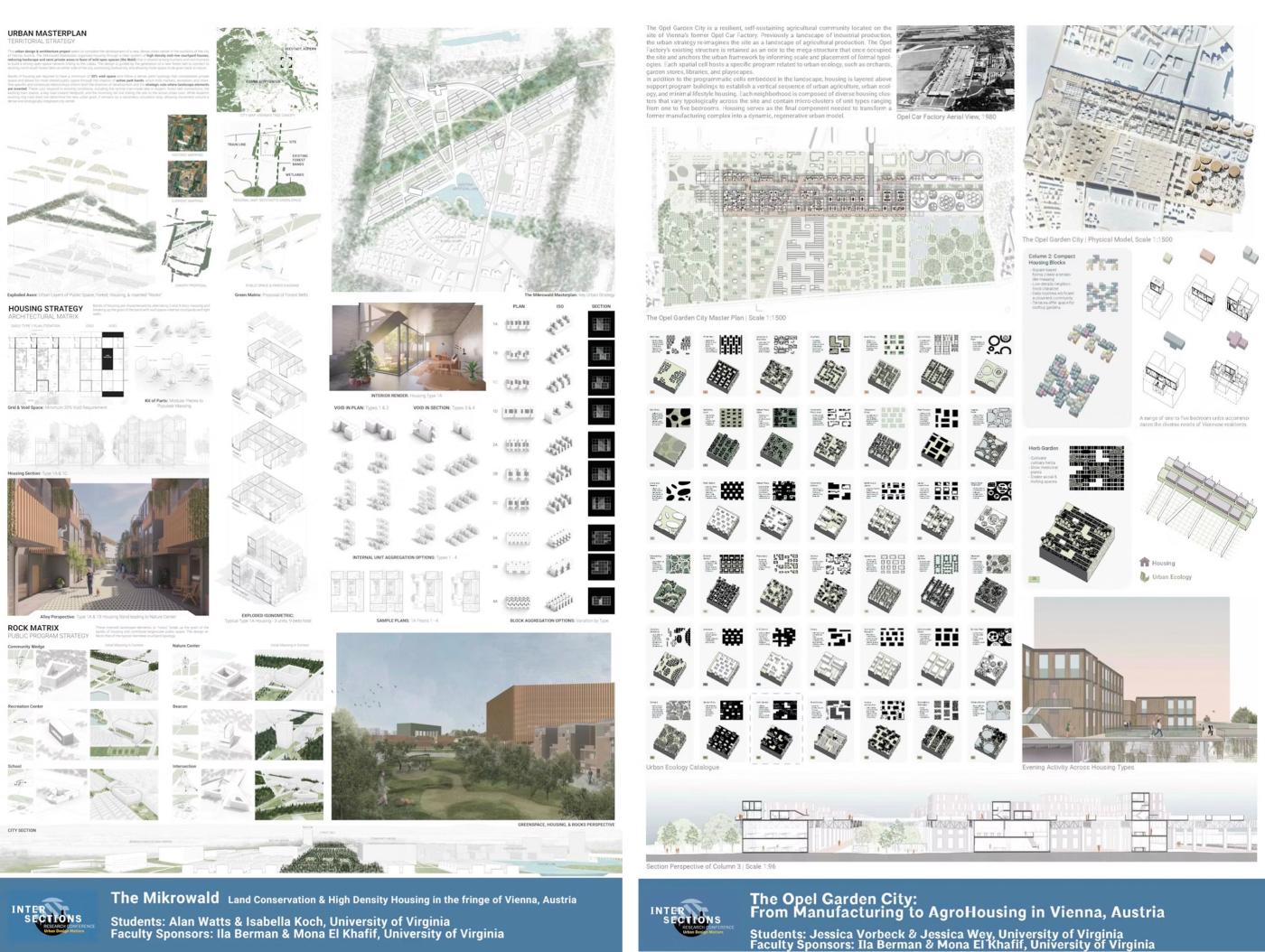
The Mikrowald. Land Conservation and High-Density Housing in the Fringe of Vienna
Alan Watts (BSArch ‘26)
Isabella Koch (BSArch ‘26)
ALAR 8020 / ARCH 4020 Fringe Territories: Designing Vienna's Exopolis // Fall 2025
Instructors: Mona El Khafif, Ila Berman
Open Garden City: From Manufacturing to AgroHousing in Vienna
Jessica Vorbeck (MArch ‘26 + UDC)
Jessica Wey (MArch ‘26 + UDC)
ALAR 8020 / ARCH 4020 Fringe Territories: Designing Vienna's Exopolis // Fall 2025
Instructors: Mona El Khafif, Ila Berman
Image
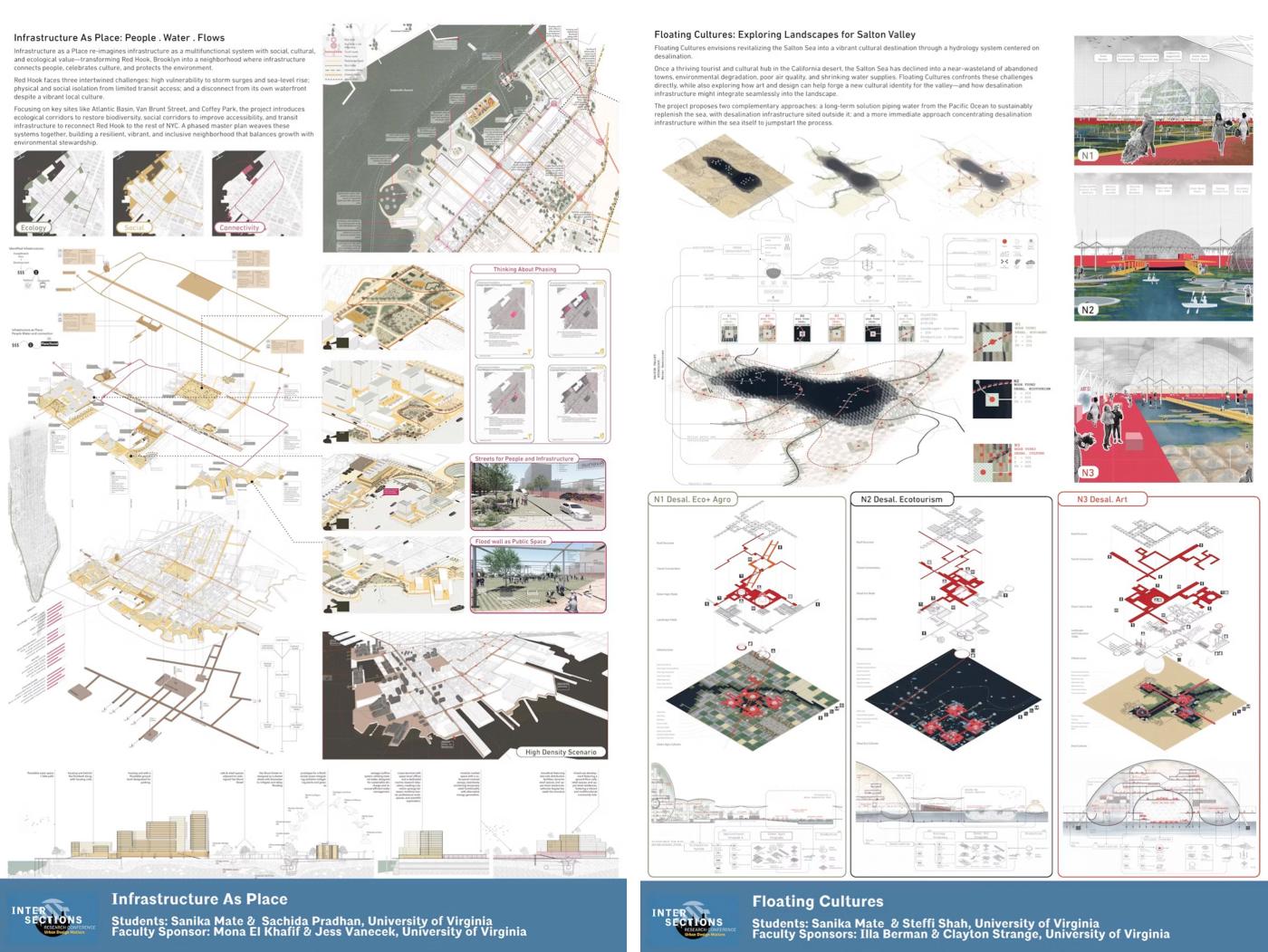
Infrastructure as Place
Sanika Mate (MUD ‘25)
Sachida Pradhan (MLA ‘25 + UDC)
ALAR 8010 / ARCH 4010 Hyper REAL // Fall 2024
Instructors: Mona El Khafif, Jessica Vanecek
Floating Cultures
Sanika Mate (MUD ‘25)
Steffi Shah (MUD ‘25)
ALAR 8020 / UD 8020 A Future Terrapolis: Speculative Urban Landscapes for the Salton Sea // Spring 2024
Instructors: Ila Berman, Clayton Strange
Image
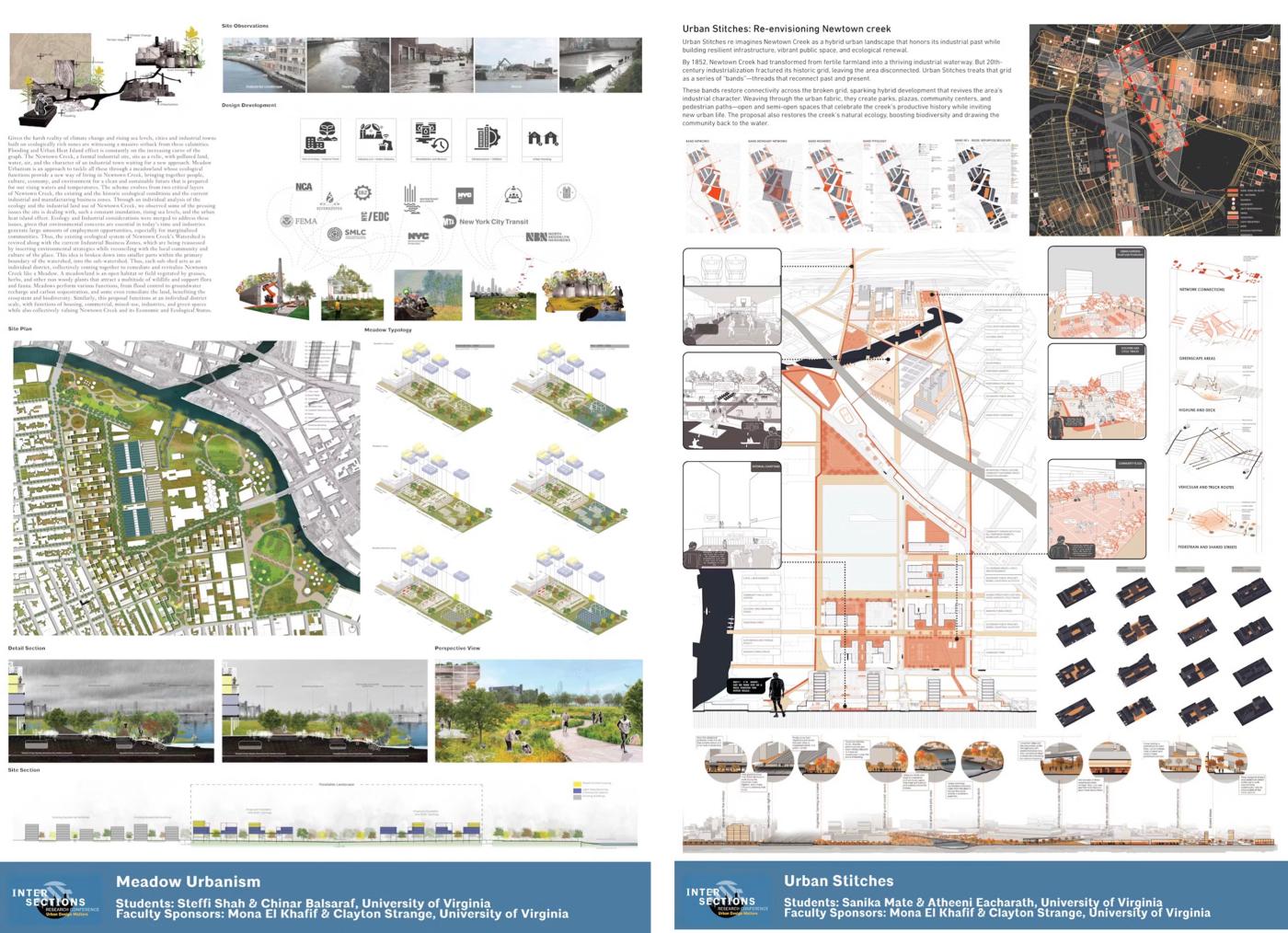
Meadow Urbanism
Steffi Shah (MUD ‘25)
Chinar Balsaraf (MLA ‘25 + UDC)
ALAR 8010 / ARCH 4010 Newtown Creek: InfraBio Urban Recoding // Fall 2023
Instructors: Mona El Khafif, Clayton Strange
Urban Stitches
Sanika Mate (MUD ‘25)
Atheeni Eacharath (MUD ‘25)
ALAR 8010 / ARCH 4010 Newtown Creek: InfraBio Urban Recoding // Fall 2023
Instructors: Mona El Khafif, Clayton Strange
The 2026 Intersections Research Conference: Urban Design Matters was presented by the Association of Collegiate Schools of Architecture (ACSA) in partnership with the Urban Design Academic Council (UDAC) and the American Institute of Architects, Regional and Urban Design Committee (AIA, RUDC). The conference was hosted by AIANY, Center for Architecture; New York Institute of Technology (NYIT), School of Architecture and Design; & City College of New York (CCNY), Bernard and Anne Spitzer School of Architecture.