On Media and Method: "10 Things" with visiting artist Yuko Nishikawa
Image
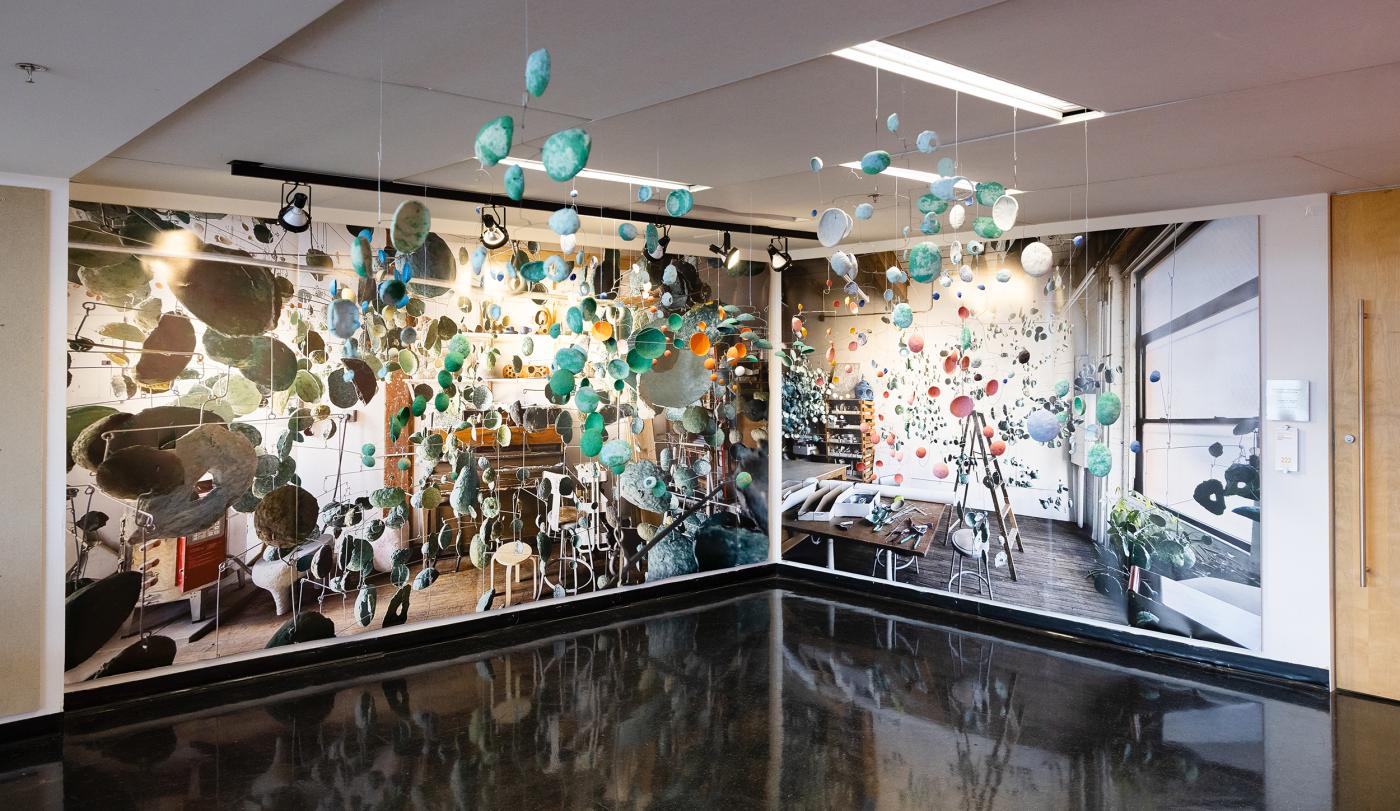
Over the course of three days in mid-February 2026, the UVA School of Architecture hosted visiting artist Yuko Nishikawa who has been living in New York City since the mid-1990s and whose artworks have been exhibited worldwide.
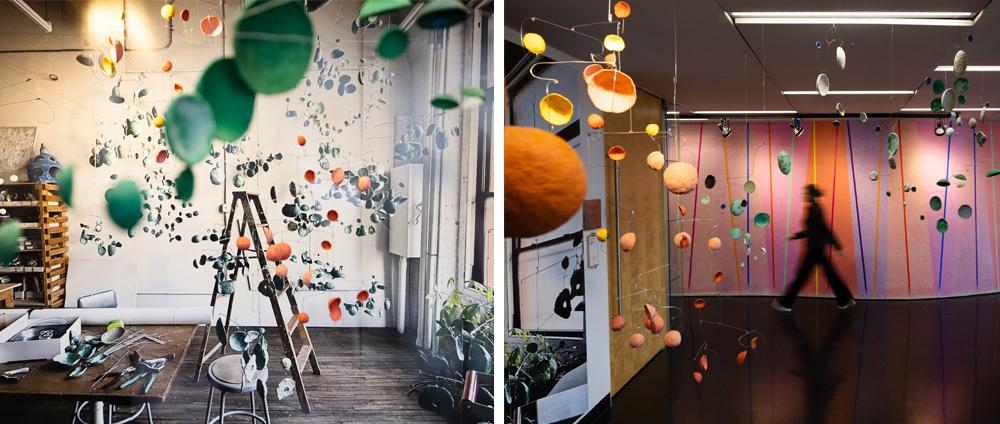
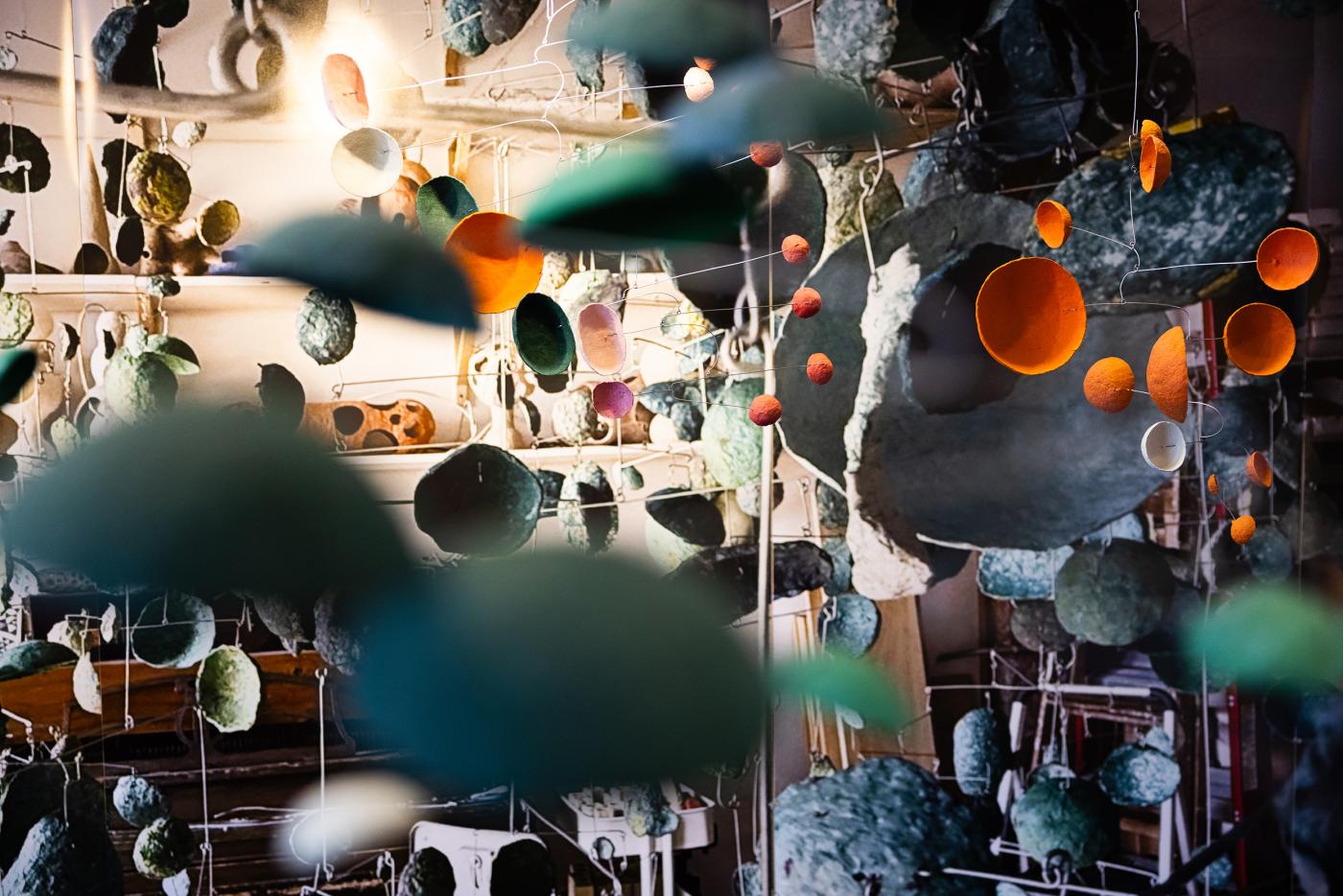
Part of the School’s programming series titled Leftovers: Rethinking Waste in Design, Nishikawa installed the exhibition “Seamless Paper to Installations” in Campbell Hall’s Corner Gallery (on display through March 13). The exhibition recreates her Brooklyn studio where she makes sculptures and installations from waste seamless paper that she processes into pulp and then a clay-like substance. The installation consists of 26 mobiles from her projects (since 2021) that are suspended from wall-to-wall overhead hanging cables creating an immersive environment “to refresh the senses.” The colorful forms, a combination of fresh greens, crisp yellows, and juicy oranges, bounce and turn on the delicate wires, responding to the movement of people through the space.
Image
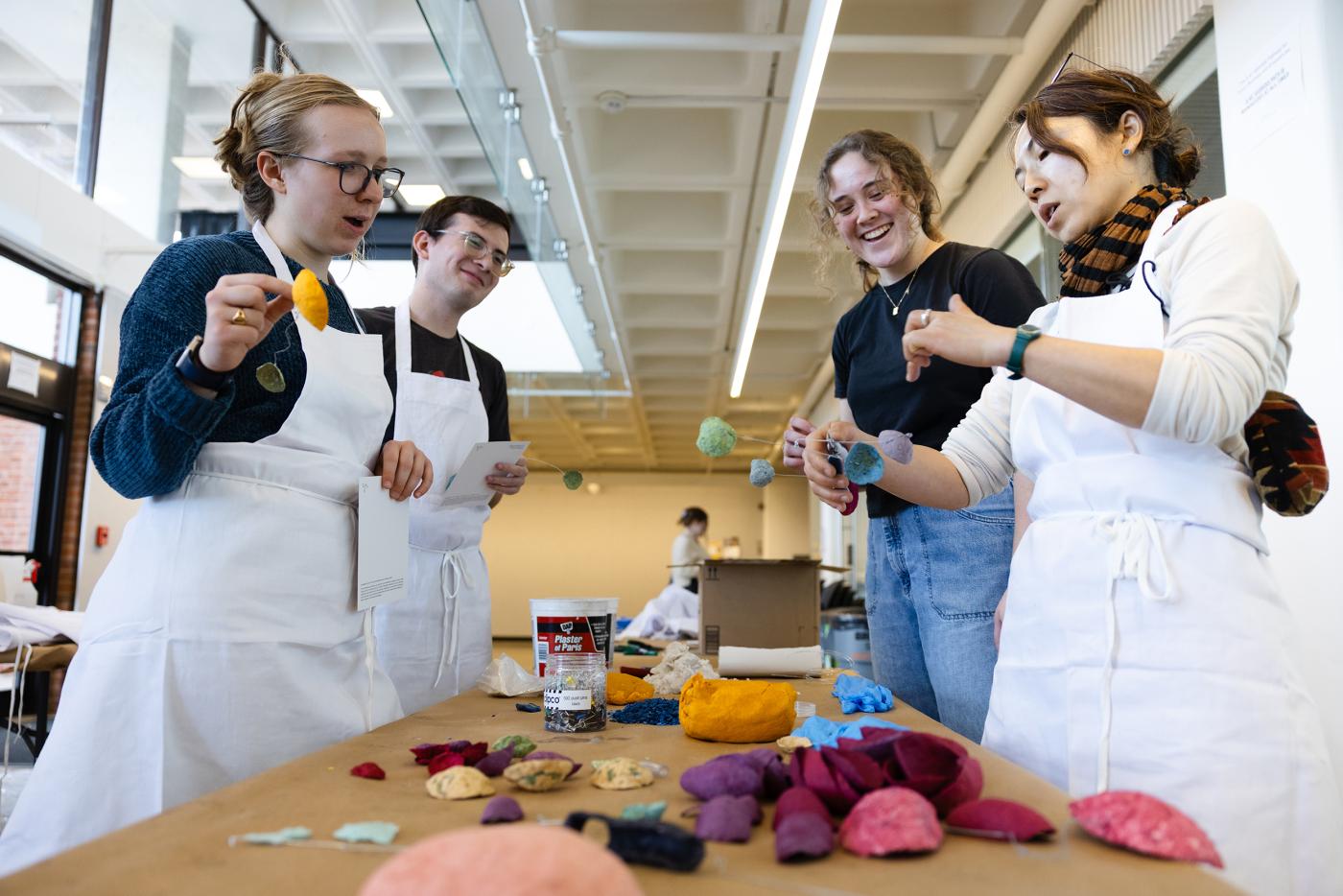
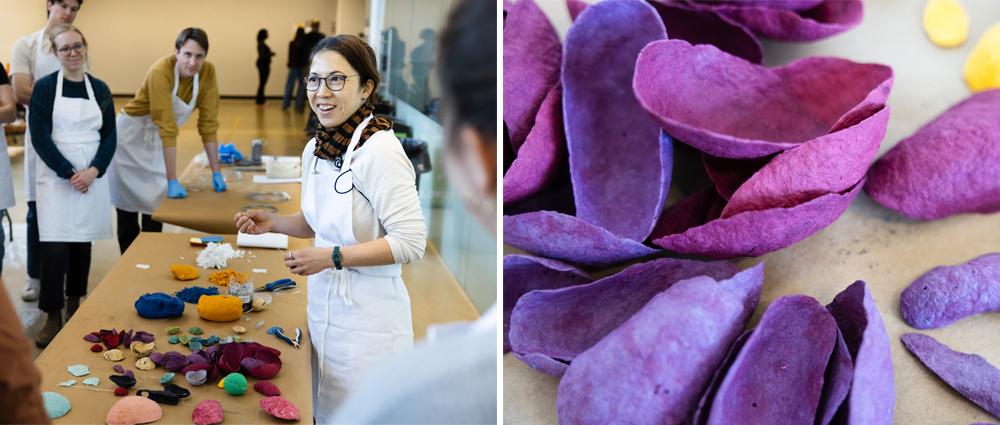
While visiting the A-School, Nishikawa conducted a workshop with 16 student participants, demonstrating her methods and techniques — from the raw material of shredded discarded paper to what she describes as “cookies” — the molded, lightweight sculptural forms that are combined to create her magical kinetic installations.
During our time with Nishikawa, we had an opportunity to learn from her practice and her approach.
“10 things” with Yuko Nishikawa
01. From Ceramics to Paper
Nishikawa’s practice evolved over time from ceramics to paper — when she initially began making hanging sculptures, she created hollow ceramic spheres but soon began experimenting with other materials. Needing to reach wider horizontal spans within the spaces she was installing and hoping to add more elements to achieve a greater density of elements, she looked for materials which conveyed a sense of movement and lightness — “like something floating in the air or water.” Practically, she sought out materials that were not fragile and that were easier to install, pack, and ship. Paper was a solution that fulfilled these goals, allowed her to reuse and transform waste material, and provided creative adaptability.
Image
02. On Making Paper Clay
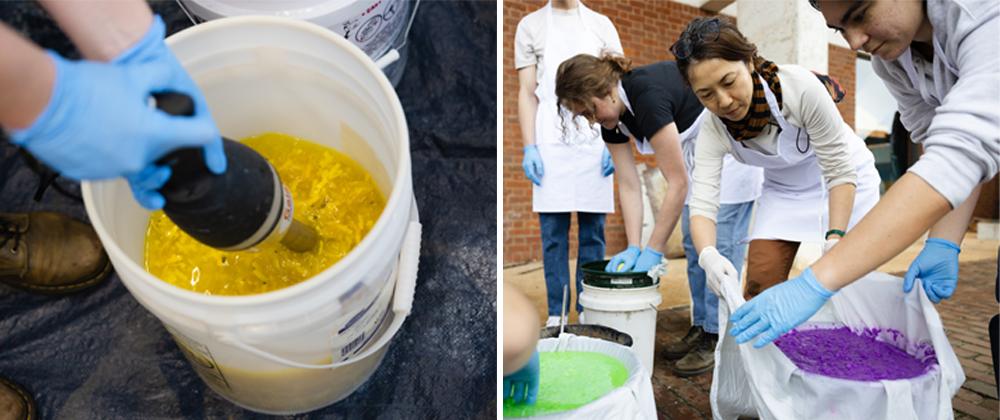
Nishikawa makes her clay material by processing used photographers’ background paper, donated by photographers that share her Brooklyn studio space. Her method retains the colors of the original paper and produces saturated colors in the final artworks. She is able to create a variety of textures and colors by combining the paper pulps at different stages in the process. The process — that includes shredding, soaking, and blending the paper; then removing the excess moisture, adding a glue binder, and forming the paper into a clay material; and finally, molding the clay into sculptural forms, connecting forms together with thin wire and suspending them in space — allows for working with a malleable material when wet, and achieving a durable and lightweight form when dry.
Image
03. Space and Interiors: Surveying and Designing
Nishikawa received a B.F.A in Interior Design from the Fashion Institute of Technology in 2002, after which she surveyed and documented buildings — such as courthouses, hospitals, and museums. With design studios like Clodagh, Builhuber, and Alexander Champalimaud, she worked on residential and hospitality interior projects. From 2007 to 2016, she designed furniture and lighting for home-furnishing brand Donghia. Her background in interiors, architecture and furniture, influences her approach to her installations. Whenever possible, Nishikawa’s first step is to see the space where she will be installing — using contextual, material, and spatial cues of the site to influence the location, density, color, and form of the artistic work.
04. “Drawing with Color”
Many artists and designers inspire Nishikawa’s work. One artist that she continues to return to is Henri Matisse (1869-1954), particularly his use of color. Matisse used color as an independent, emotional force rather than a tool for realistic description — refining a palette of intense, unblended pigments. During his final years, when confined to a wheelchair and bedridden, he developed a technique described as “drawing with color” where he cut directly into paper painted with gouache, rather than first sketching with pencils. Nishikawa shared that Matisse’s work, its evocation of energy, movement, and joy, serves as a constant catalyst for making new works.
05. Childhood
Nishikawa grew up in Japan’s northern port city of Hakodate and then Chigasaki, a small seaside town south of Tokyo. Ceramics were part of her childhood and she was introduced to the medium and practice as a young child. At the time, she wasn’t allowed to practice on the wheel. Later, this untapped curiosity fueled her interest in ceramics as part of her artistic practice — when she was old enough, she was drawn to testing her hands at the wheel.
Image
04. A 100-Day Project
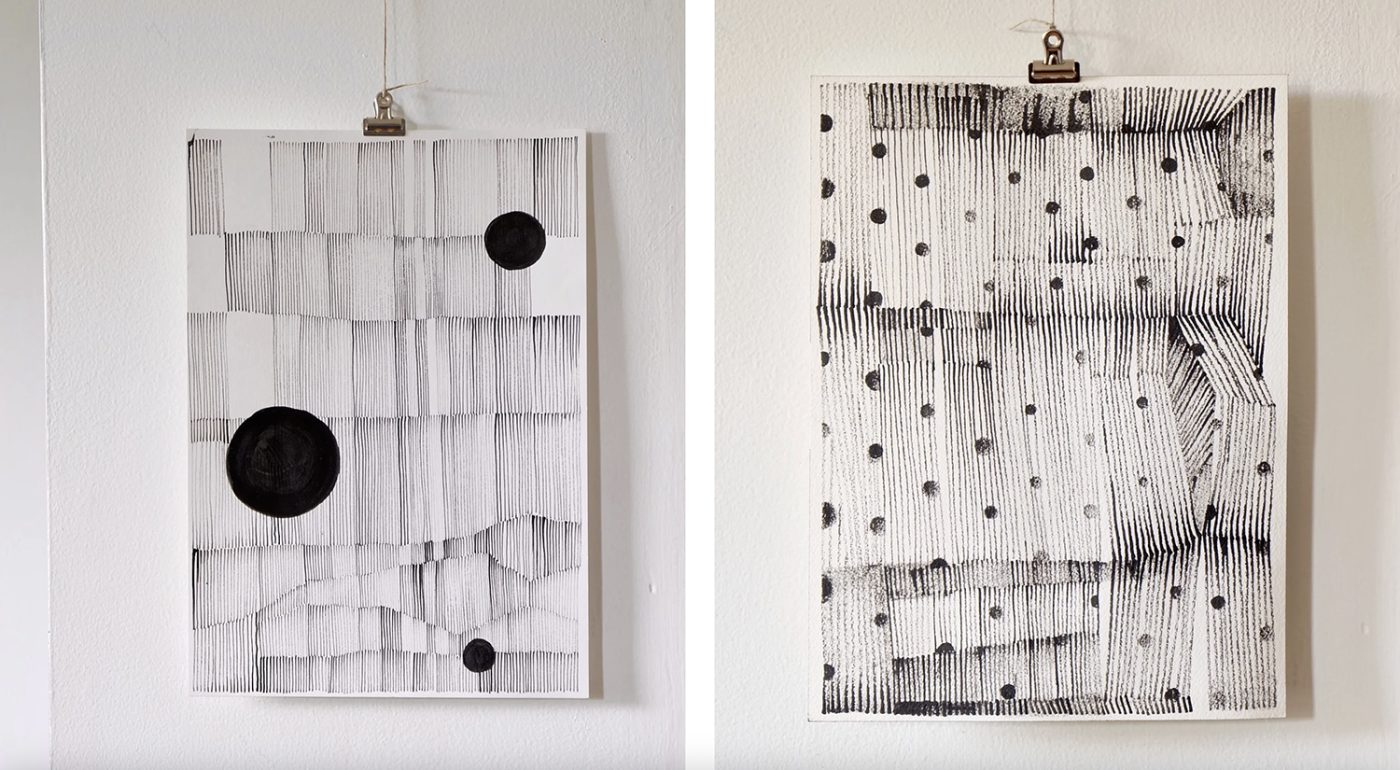
When the 2020 quarantine paused her ceramic studio work, Nishikawa made My Worker is Working from Home and She is a Painter, a one-hundred-day project. “When New York City announced its lock-down, I assigned myself a stay-home project where I complete one painting and photograph it before the sun goes down, every day for one hundred days.”
07. Making Time
Nishikawa’s commissions are diverse, from institutions to retailers, from galleries to private clients. At any given time, she is working on multiple commissioned projects, but she always carves out some time to work on personal projects. These self-defined projects help Nishikawa evolve her work, to experiment and test ideas and methods. Making time for work that isn’t guided by the parameters of a commission is an important part of Nishikawa’s practice.
Image
08. Words Without Music
In his memoir, Words Without Music, composer Philip Glass emphasizes ignoring public opinion to foster artistic freedom, describing this mindset as a “wonderful gene — the I-don’t-care-what-you-think gene”. Glass’s memoir and his reflections on how he navigated early criticism — highlighting his belief that true creativity requires independence from, and indifference to, peer judgment or popular approval, has stayed with Nishikawa as she continues to build and evolve her artistic practice.
09. Salon at Forest
From early 2017 to 2020, Nishikawa hosted Salon at Forest — a monthly conversation event where two presenters were invited to speak about their own creative journeys: why they do what they do, what motivates them, the struggles they face and how they overcome them. The series hosted over 50 presenters from wide-ranging disciplines including ceramics, glass, painting, sculptures, poetry, neuroscience, taxidermy, live action role playing, textiles, dance, film and set design.
10. On Weather
When Nishikawa hosted her workshop on February 20th on Grounds in Charlottesville, we enjoyed a day that began with morning fog that cleared up by the afternoon, becoming sunny, breezy and very warm (high of 68 degrees F). The next day, she flew back home to Brooklyn and braced for a significant snowfall on Sunday from Winter Storm Hernando. Over the course of the storm, Central Park in New York City received 19.7” of snow.
Image
We thank Yuko for her gracious generosity in sharing her art and her process with us at UVA and the A-School. Her exhibition and workshop were supported by the UVA Arts Council.