Forging New Paths: Meet the School of Architecture's First Walentas Scholars
Image
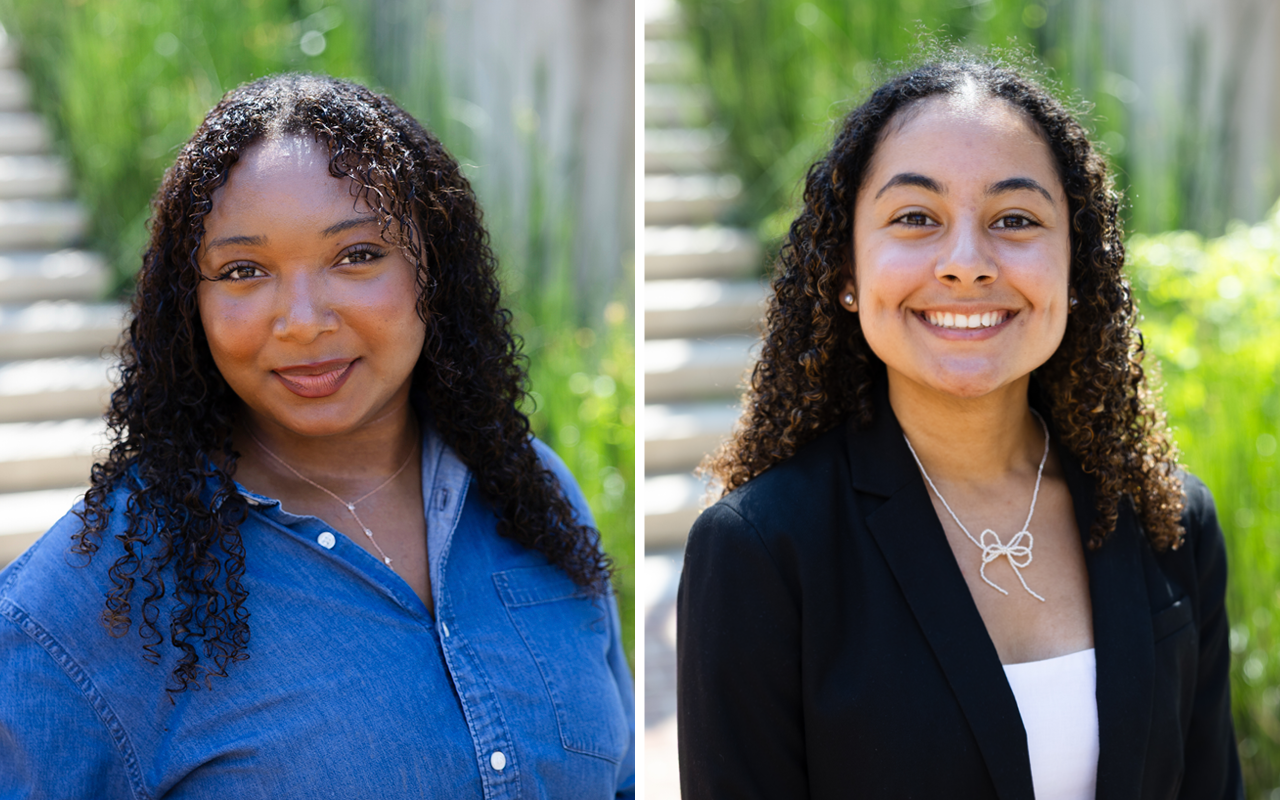
For first-generation college students, arriving at the University of Virginia often represents more than the start of an academic career. It marks the beginning of a new path, one that can transform not only an individual's life but also the lives of future generations. This year, Kaitlyn Johns and Julia Miller became the first students in the School of Architecture to be named Walentas Scholars, a prestigious merit-based program supported by the Jefferson Scholars Foundation that recognizes exceptional leadership, academic achievement, and commitment to community among first-generation students.
As members of UVA's newest cohort of Walentas Scholars and first-year A-School students, Johns and Miller share a curiosity about the world and a desire to make a meaningful impact through design, planning, research, and service. From architecture and environmental research to robotics, mentorship, and community engagement, both students’ experiences reflect the qualities at the heart of the scholarship program. In the conversation below, they share what it means to be among the first in their families to pursue a college degree, and the opportunities they are most excited to explore at the A-School and beyond.
What drew you to the UVA School of Architecture?
Kaitlyn Johns: I was really attracted to the School of Architecture's commitment to the fundamentals of design. Since high school, I have been engrossed in learning about what the built environment is at its core, and I felt that no other school could help answer my inquiries about architecture quite like the University of Virginia. Since starting classes at UVA, my thoughts about the program have been affirmed, especially through learning about how biophilic features can be incorporated into the built environment, even in industrial spaces.
Julia Miller: The interdisciplinary nature of the Urban + Environmental Planning major is what initially drew me to the School of Architecture. Going through the college application process, I found few schools that offered programs that married my passions for STEM-related research and the humanities. When I discovered the Urban + Environmental Planning major, I was so happy to find the perfect combination of my interests. And now, here I am!
What does being selected as a Walentas Scholar mean to you personally, especially as a first-generation college student?
JM: Being selected as a Walentas Scholar means that while I may be the first in my family, I will make sure that I am not the last. I have this once-in-a-lifetime opportunity, but I also have a responsibility to ensure that I uplift others around me, both in and outside my family, to pursue their education.
Have you ever seen the painting Wanderer Above the Sea of Fog by Caspar David Freidrich? It portrays a young adventurer atop a cliff, looking over a vast landscape frosted by clouds and fog. That is kind of how I view being a first-generation student; I am uncertain of what awaits, as I have had no one in my immediate family to follow. Like the figure in the painting, I am excited to discover what lies ahead.
KJ: During my freshman year in high school, I was taking care for my disabled mother and had no idea what my future had in store for me. Being offered the opportunity to have a full college experience has been an absolute honor, as it is something I had not deemed possible given my circumstances. As a first-generation college student, being selected as a Walentas Scholar also means the opportunity to build a legacy for myself and my family.
Tell us about a leadership, service, research, or creative experience that has shaped who you are and influenced your goals.
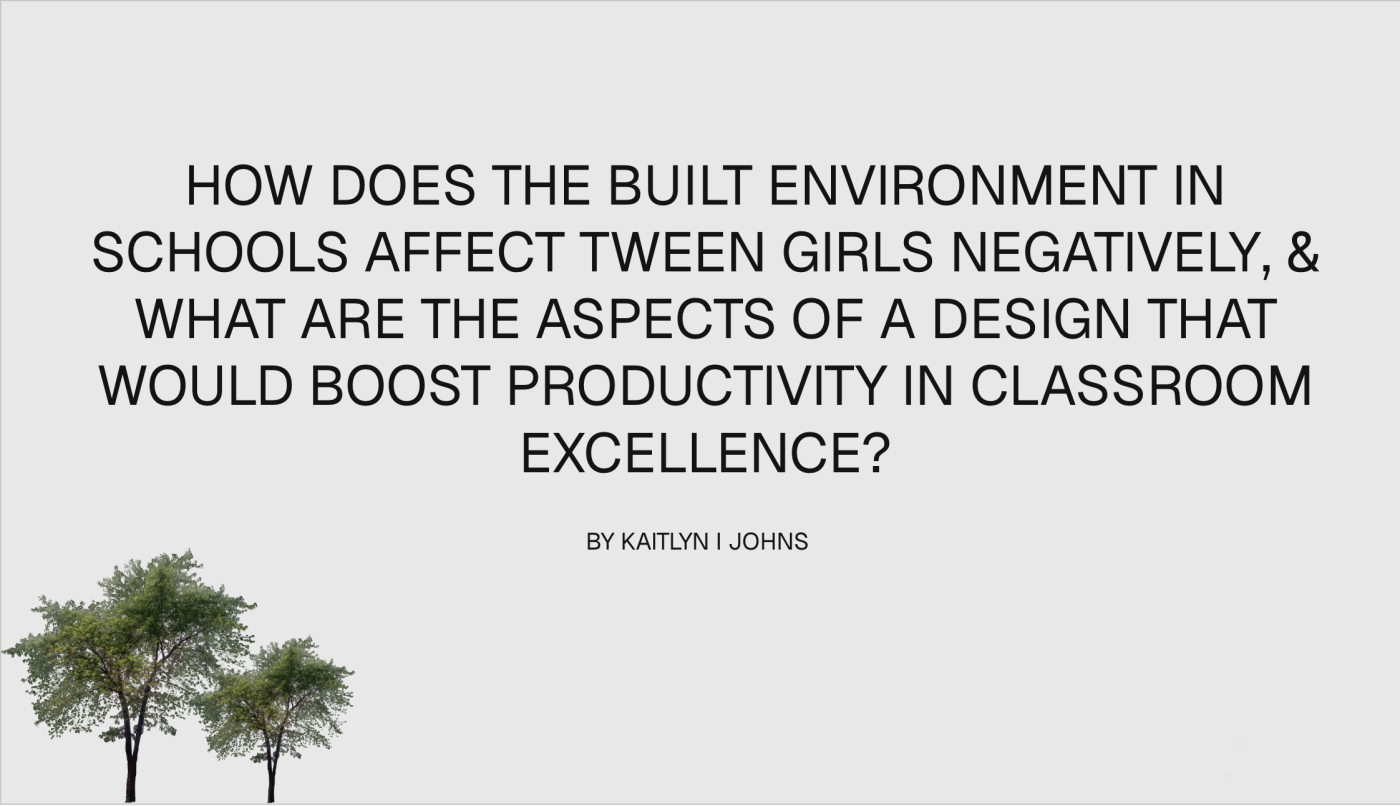
KJ: Since I was young, I have been tremendously curious about children and their intersection with design. Over the years, first working as a teacher’s aide at a small private school and later as a head art teacher, I began to realize that specific features in a classroom, including sensory tables, light fixtures, and seasonal color palettes can boost children’s productivity and excitement for learning. Ultimately, my experiences inspired my independent mentored research in which I explored the question: How does the current built environment in schools affect tween girls (ages 11-13) negatively, and what are the aspects of design that would boost productivity in classroom excellence?
To answer this question, I took notes documenting both my workplace and high school classrooms, studied the Empathizing-Systemizing Theory by Simon Baron-Cohen, and drew from architect Mariam Issoufou’s philosophy, which is essentially '"for the people [;women], by the people [;women].'" I also used physical materials to develop solutions to my problem.
Image
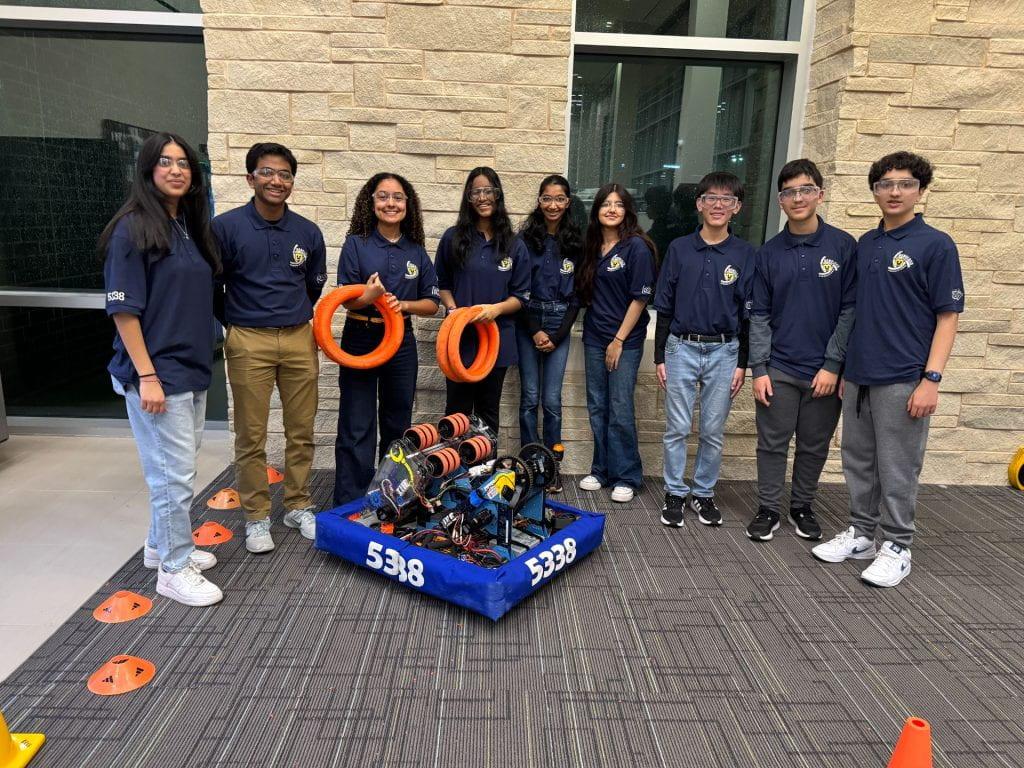
JM: I don’t know who or where I would be today without my high school robotics team, RoboLoCo, on which I formed cherished friendships and learned so much about leadership and collaboration. First, I learned how to fabricate things and work with my hands. Soon after I developed presentations with my teammates, speaking to judges about the impact our team has had on the community. This, along with youth outreach events, taught me how much I adore connecting with people, especially young girls and minority groups. I did not have any STEM role models growing up, so I wanted to make sure that they did not have to look far to find theirs. When I finished my last year as president of the team, I realized I needed to have those connections with others to make an impact on communities, and to lead. This is why I chose urban and environmental planning, it bridges my passion for STEM with my love of human connection.
Image
What opportunities and experiences are you excited to pursue, both inside and outside the classroom, over the next few years?
JM: Where do I begin?! I am looking forward to taking Urban + Environmental Planning courses, especially on the environmental side. Study abroad as well. There are so many places to go and I'm going to fit in as much as I can. I'm also eager to start new research projects. In addition to robotics, I conducted a two-year research project in high school focusing on microplastics. Put simply, I am excited to discover new ways of understanding the world!
Outside of the classroom, I want to join clubs and form a community like I did in high school. I look forward to growing even closer to my Walentas Scholars community; we’re already a family. Overall, I can’t wait to see who I become over the next four years. Go Cavaliers!! Let’s do this.
What creative interests are you eager to develop in the future?
KJ: I am most excited to further develop my painting and sketch investigations, and begin incorporating my community in my art. I have thus far created a portfolio answering the question, "How do instilled childhood memories and ideals cognize during teen maturation?" I answered this question through my own introspection and by mirroring myself in my paintings. Going forward, I want to include the people I know here in my venture to answer the question, "Why is love's sharpness mirrored as different stages of grief?"
About the Walentas Scholars Program
Established through a gift from David Walentas and Jane Walentas, the Walentas Scholars Program supports outstanding first-generation college students who demonstrate exceptional leadership, scholarship, and citizenship. Scholars receive full funding for tuition, room, board, books, and other educational expenses, along with access to leadership development programs, research opportunities, career networking, travel experiences, and a community of fellow scholars through the Jefferson Scholars Foundation. During the 2025-26 competition cycle, 14 Walentas Scholars from nominating regions across the country were selected to join UVA's Class of 2030. Johns and Miller are the first recipients to enroll in the School of Architecture.